

The Galápagos Islands are famous worldwide for their extraordinary wildlife. Researchers have now added another remarkable species to the archipelago’s list of discoveries: a tiny, bright blue deep-sea octopus. The new species, scientifically named Microeledone galapagensis, is among the smallest octopuses known to science. Curled up, the animal would easily fit into the palm of a hand.
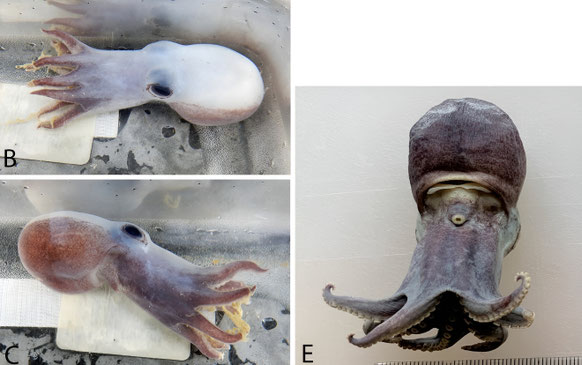
He is tiny! He is blue!
The octopus was first discovered in 2015 during a deep-sea expedition near Darwin Island in the northern Galápagos. Using a remotely operated underwater vehicle, scientists explored the seafloor at a depth of approximately 1,770 metres. As the camera moved across the ocean floor, a tiny blue octopus suddenly appeared on screen. The researchers’ first reactions were simple but enthusiastic: “It’s tiny!” and “It’s blue!”
Back at the Charles Darwin Research Station, scientists sorted through the specimens collected during the expedition. The unusual octopus immediately stood out. Because its identity was unclear, the team consulted renowned octopus expert Janet Voight of the Field Museum in Chicago. She quickly realized that the specimen represented something truly special.
A new Species
One of the biggest challenges was that only a single specimen existed. Rather than dissecting this rare animal, researchers used advanced CT scanning technology. The high-resolution images allowed them to examine the octopus’s internal anatomy in three dimensions without damaging it. These scans provided enough information to formally describe the species.
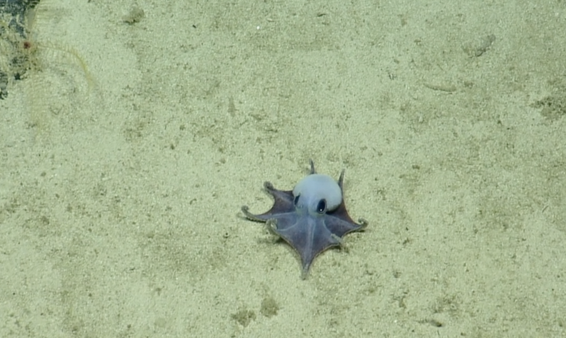
Blue octopus, Photo: CDF
The discovery highlights how little is still known about the deep waters surrounding the Galápagos Islands. Every new species helps scientists better understand these hidden ecosystems and emphasizes the importance of protecting them.
The tiny blue octopus is a reminder that even in one of the world’s most celebrated natural environments, fascinating secrets remain to be discovered.