
On Floreana, introduced rats, mice, and feral cats have had a devastating impact on the wildlife. Fity-five native vertebrate species are currently listed as endangered or critically endangered on the IUCN Red List, including the endemic Medium Tree Finch (Camarhychus pauper), which is found exclusively on Floreana Island.
Twelve species are considered extinct on Floreana. These include the Floreana giant tortoise (Chelonoidis niger), the Floreana mocking bird (Mimus trifasciatus), the Floreana racing snake (Pseudalsophis biserialis biserialis), and the little Vermilion Flycatcher (Pyrocephalus nanus). Fortunately, all twelve species still exist on other islands of the Galápagos Archipelago. However, for their return and to stabilize their populations, a secure habitat must be available on Floreana Island.
Floreana has been identified by experts as one of the world’s five most important islands where the eradication of invasive mammals brings particularly great benefits to threatened species—especially when combined with the promotion of sustainable socioeconomic development for the local community.
Initial Successes
The reduction of invasive predators has already yielded significant ecological effects: populations of the Floreana lava lizard and the Baur’s leaf-toed gecko (Phyllodactylus baurii) have increased, and sightings of the animals have risen by well over 453% compared to the period before the first culling campaign. Galápagos doves have returned, and after 190 years, the Galápagos rail (Laterallus spilonota) has been sighted again on Floreana.
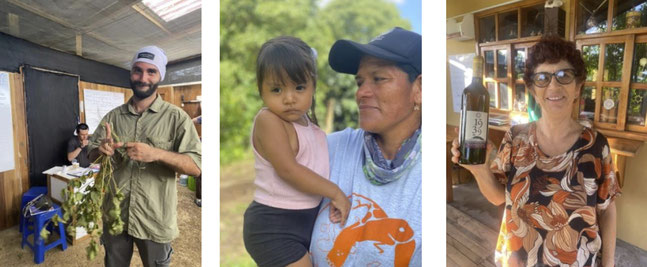
The local population is also benefiting: while more than 70% of many crops were lost to rats before the baiting campaign in 2023, yields have now increased significantly.
This transformation of Floreana Island is an example of systemic change and a beacon of hope for restoration projects in the Galápagos Archipelago or on other inhabited islands worldwide. However, it is essential to involve and actively engage the local population in these processes.
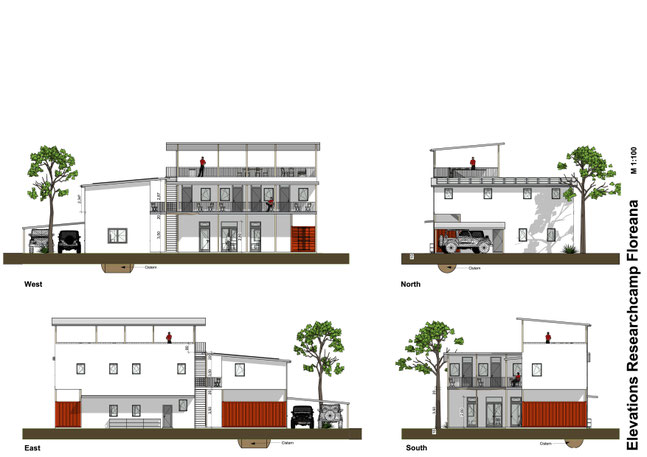
This is where the Floreana Community Open Science Center (OSC) comes in. It will serve as a central hub for citizen science and environmental education. The involved local population, researchers, and visitors will thus learn to better understand these processes and actively participate in sustainable conservation. Local residents will be guided in observing animal species; they can help shape scientific processes and thereby contribute to preserving their environment in the long term. In this way, children learn about biodiversity right on the spot, and families can participate in monitoring the returning species. This education creates sustainable income opportunities through ecotourism and sustainable land use. The scientific data generated in this way is then incorporated into international conservation strategies.

The First Returnees
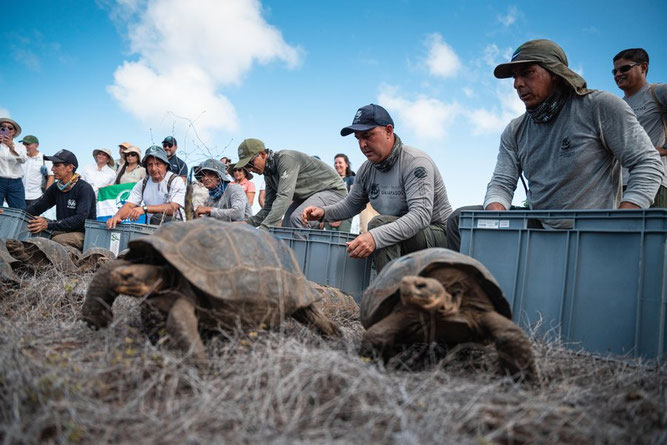
Another phase of this most significant restoration project of our time is now beginning: 158 giant tortoises are returning to Floreana Island for the first time in 150 years—a milestone that will be followed in the coming years by the reintroduction of 11 additional species that had become extinct on the island. All animals were fitted with GPS transmitters, allowing their movements on the island to be tracked over the long term.
Construction of the OSC began in May 2025 with all necessary permits and strong support from the local community. However, to ensure that all educational and research programs can start immediately and that the local population is involved in this globally significant conservation project, the completion of the building is essential.
Help the residents of Floreana complete this pioneering project and become part of the success of the island’s restoration.